Chase
Start a SubStack
Pick a card and see every parallel at a glance: the ones you hold and the ones you still need.
 StackChase
A tracker for collectors who chase parallels, make trades and sell cards, not only store them.
Sports, UFC, Pokémon, Magic: The Gathering. Graded slabs and raw cards in one Stack, with every parallel you own and every one you're missing.




One Stack, one set of tools, whatever you collect. A 1989 rookie, a holo Charizard, a UFC autograph or a Magic alpha rare, graded slab or raw card: each gets the same inventory, the same condition tools and the same shareable page.
Pick a card and see every parallel at a glance: the ones you hold and the ones you still need.
Log what a card cost and what it sold for, with the listing as proof, or link it to the cards you traded it for. Your archive charts your realized gain month by month, and a sale with no cost on record is left out, never counted as free.
Select cards and export a Seller Hub file that turns them into eBay drafts, with the grade and cert already filled in. Nothing is sent to eBay until you upload it.
Values come from recent sales, and the sales are shown. If a card hasn't been priced we say so and leave it out of your totals, instead of showing a number we can't back.
Photograph a slab and it's read for you: the card, the grade, the cert. Backs are paired with their fronts, a serial that doesn't fit the parallel gets flagged, and nothing goes live until you've checked it.
Zoom into corners, edges and surface, front and back, before you trust a grade.
Public, by link only, or private, and you can show the cards without showing what they're worth. Paste a card's link and the preview shows the card itself.
Search by name, set, team or serial, filter by year, grader and value, sort any column, and select many cards at once to export them as eBay drafts or delete them.
The pictures are drawn examples. The cards, names and figures in them are made up to show what each tool does.
Collections their owners have made public, starting with the example Stack.
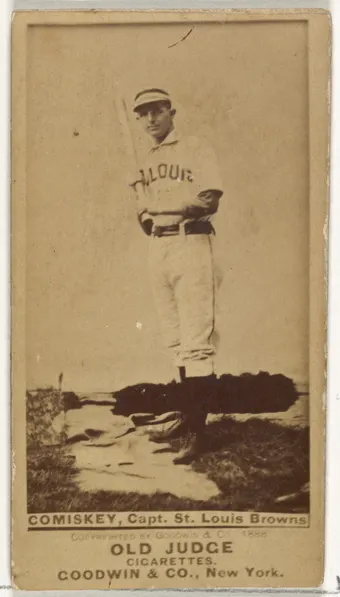
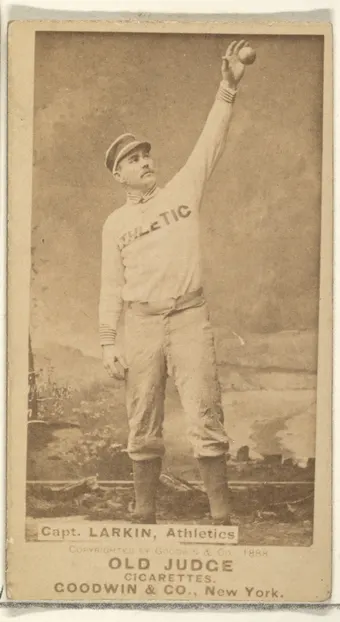
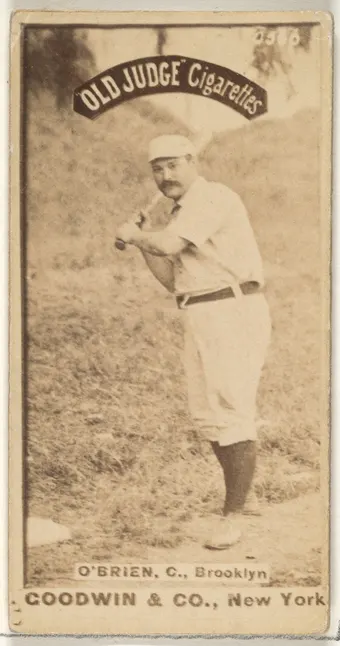
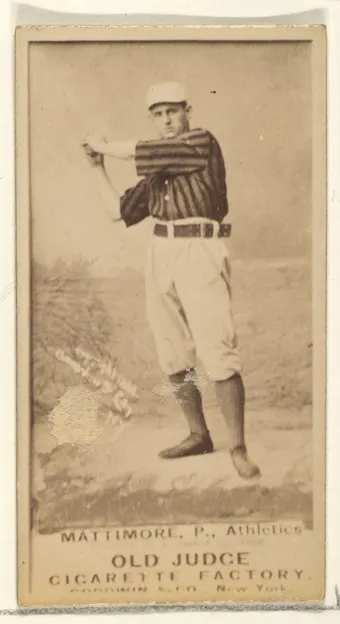
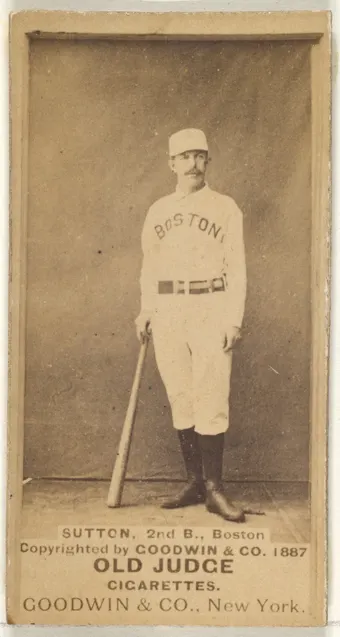
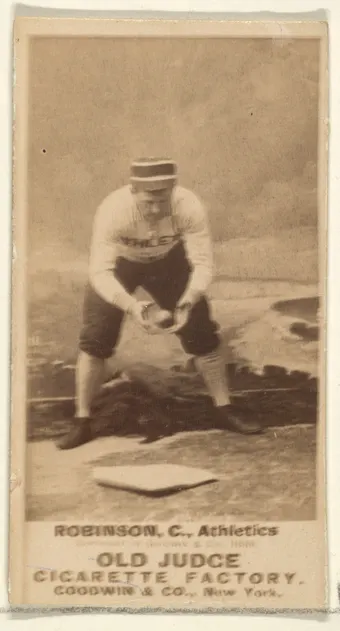
These came packed in cigarette boxes in 1887 — the Old Judge series, the set the hobby effectively starts with. Someone kept them safe for a hundred and forty years, which is the whole idea. StackChase is for whatever you're keeping safe now, printed last month or last century.
Old Judge series (N172), 1887–1890. Public domain, The Metropolitan Museum of Art.
There's no spreadsheet to build and no fields to invent. Photograph a card and it gets read for you — the set, the number, the grade, the cert off the slab. Add the next one whenever you feel like it. Your data is yours: export it any time.
Start your Stack